BWAC Member Spotlight
Welcome to our Member Spotlight as we introduce the world to our wonderful members. We are proud to be a member-based organization providing exhibition and collaboration opportunities to artists working in various media.
We invite you to meet some of our featured artists as we “open the doors” to our artist community.
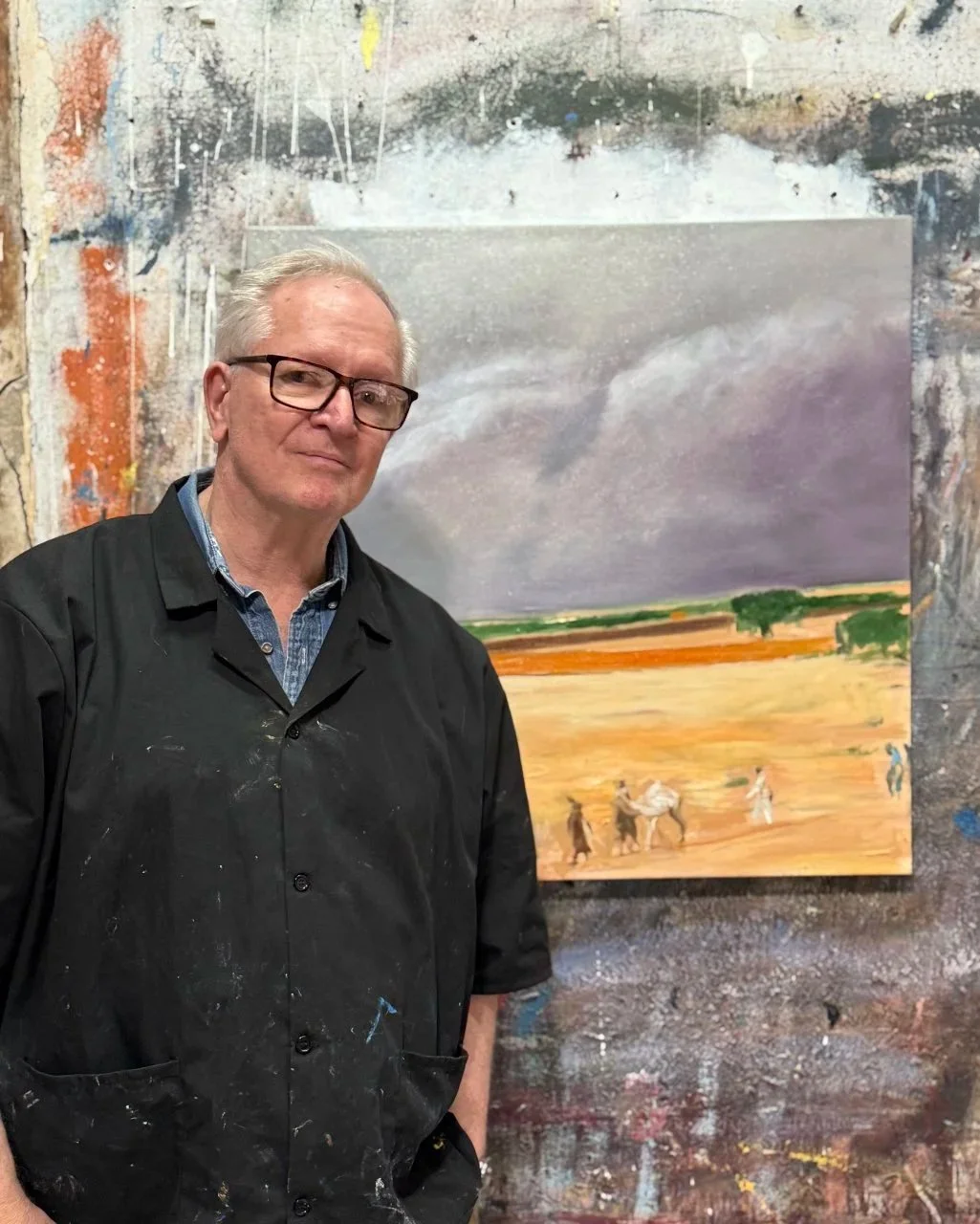
STEVEN LAWRY
1. Please tell us something about yourself. Where did you grow up? Where did you go to school? Do you have a different career besides being an artist?
I grew up in Florida. My parents met at the Jacksonville Naval Air Station in the years just after World War II. My father was an aviator and my mother a communications specialist. My father was from Pittsburgh and my mother from Madison, Wisconsin. They liked Florida and made their lives there. I went to university in Florida then joined the Peace Corps and went to Botswana, in Africa, in 1975, to work on land use and land reform problems. This set my life on a pathway of travel, study and work, living in Africa and Asia for many years, working on complex social and environmental problems and, fundamentally, trying to understand relationships between people and land. I've pursed these interests as a scholar, educator, and as a grant maker at the Ford Foundation. I've lived and worked in a number of African countries, often in rural areas, and in large cities like Cairo, New Delhi, and Jakarta. I've been based in New York City since 2001 but have been away a lot!
2. Can you walk us through your creative process? How do you approach starting a new piece?
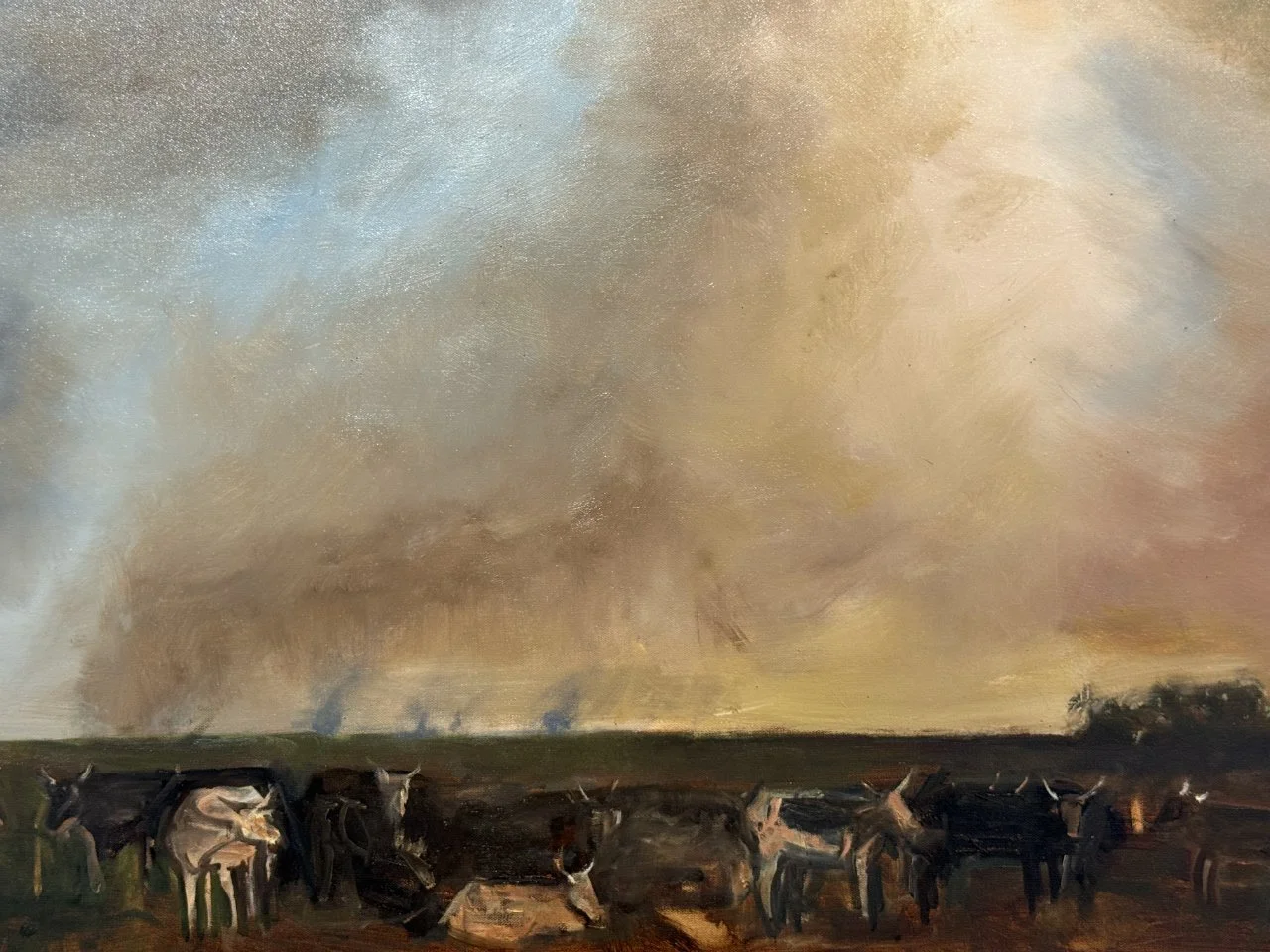
While I try to convey a sense of beauty and power in nature, human influence is almost always present. Sometimes the human presence appears small or inconsequential in relation to what historians of 19th century landscape painting called the sublime, the awesome power and dark beauty of nature, qualities associated with William Turner's landscapes. In some of my paintings human influence is a central theme. An example is my painting, Botswana grasslands burning at the end of the dry season. The scene shows a herd of cattle in the foreground. The sky is full of smoke from fires set on dry grasslands by herders. Burning off old grass just before the arrival of summer rains ensures rapid growth of fresh green grasses once the rains arrive. Fire is used to shape and preserve an ecology suitable for livestock grazing.
3. How long have you been painting? What medium do you prefer and why?
I started painting just under two years ago. I was drawn naturally to landscapes. My paintings almost always show evidence of human presence or influence. Landscapes, including those that inspire us for their natural beauty, have been shaped by human intervention. I believe that striving for sustainability, or human and ecological well-being, is fundamentally a humanistic project of social and ecological care. A British landscape artist I admire characterizes a landscape as, "a force field of dynamic and interrelated elements." I like the notion of force field, which we normally associate with quantum physics. I'm not happy with a painting unless it conveys a feeling that the scene is alive; that the elements in concert convey a sense of the forces of nature at work. A friend at the Art Students League likes to say, "Nature always gets it right," so depicting these interrelationships convincingly is the principal task one faces in divining a composition. Are the interactions authentic, yes; but do I give a sense of dynamism to the scene? Balzac wrote that, "the aim of art is not to copy nature but to express it." Expressing nature is what I strive for, though I often fall short.
4. Your work is sometimes (often?) topical. What determines your choices of subject?
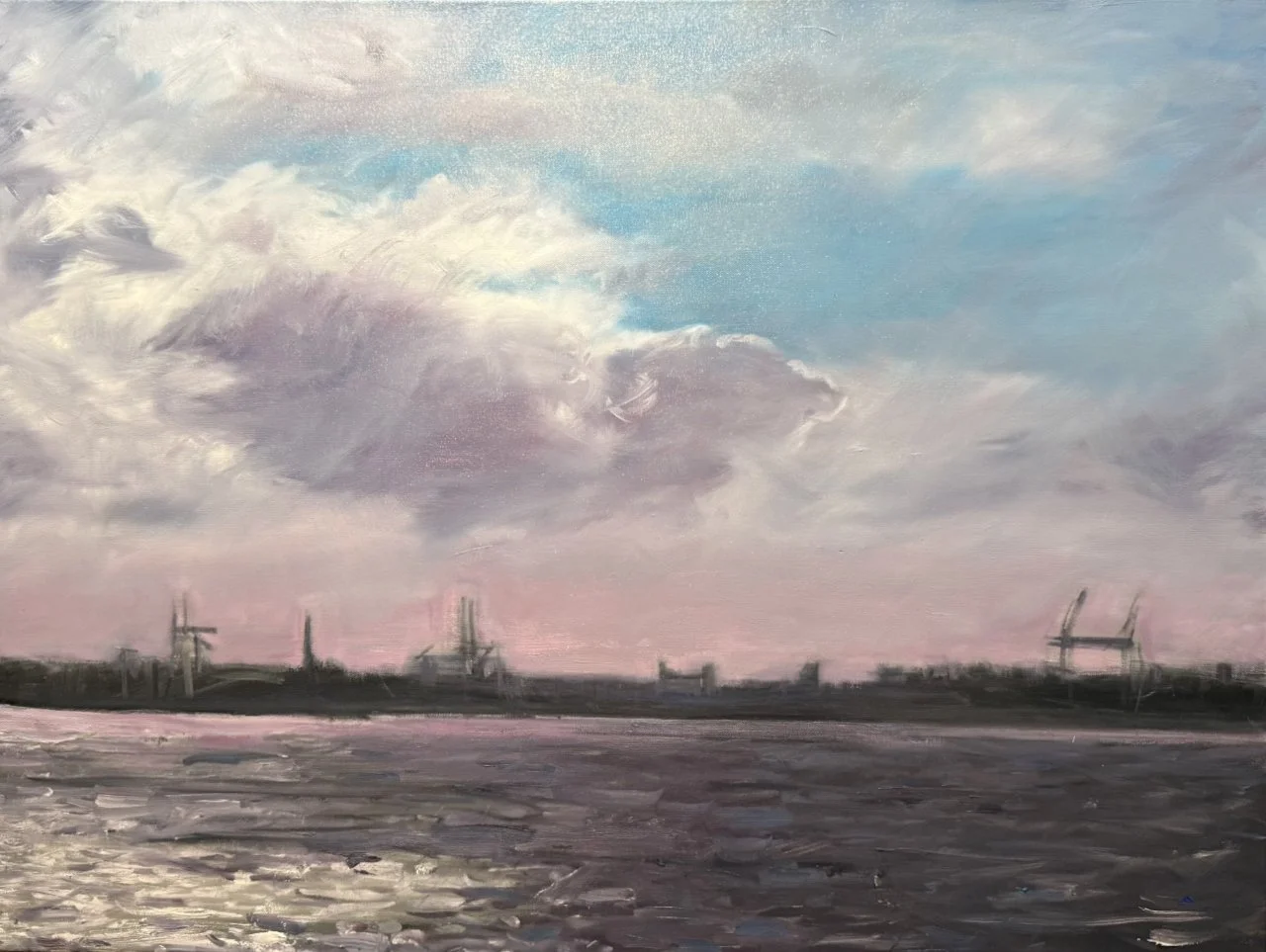
My sources of ideas for paintings vary. I aim to depict scenes that I've encountered directly in nature. I'm sensitive to the beauty of the scene and the natural history that the scene represents. Together these relate to light, color, and compositional and narrative elements and their potential to give the scene a sense of aliveness or the sublime. I've been painting New York harbor scenes, mainly because I spend my days at the harbor's edge. My first studio was in Red Hook, in a customs warehouse constructed of stone and timber in 1869 and right on the harbor (the building was destroyed by the fire that also destroyed BWAC's gallery in September 2025). My current studio is in Sunset Park, also overlooking the harbor. I take the ferry to work daily, from Lower Manhattan to Sunset Park. Being on the water makes for a wonderful commute. One of my first large paintings is View of Red Hook dockyards.
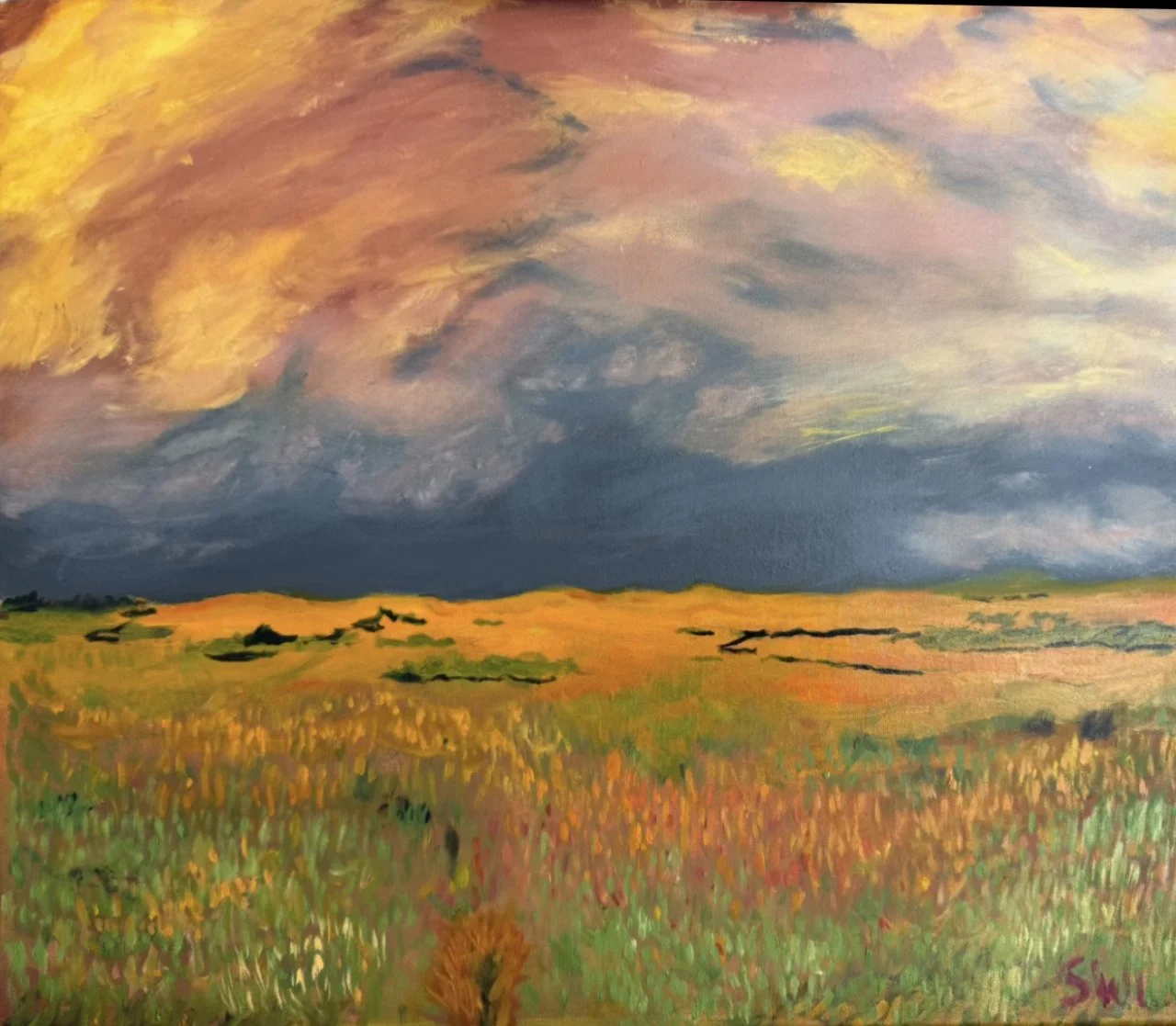
I did my dissertation research in Lesotho in the 1980s. It's a beautiful mountainous country in Southern Africa. Mountainous environments experience extreme and rapid shifts in temperatures, rainfall, snow, and winds. Summer storm in Lesotho lowlands reminds me of those forces, and of my wonderful time there.