
BWAC in Sunset Park Open Studios
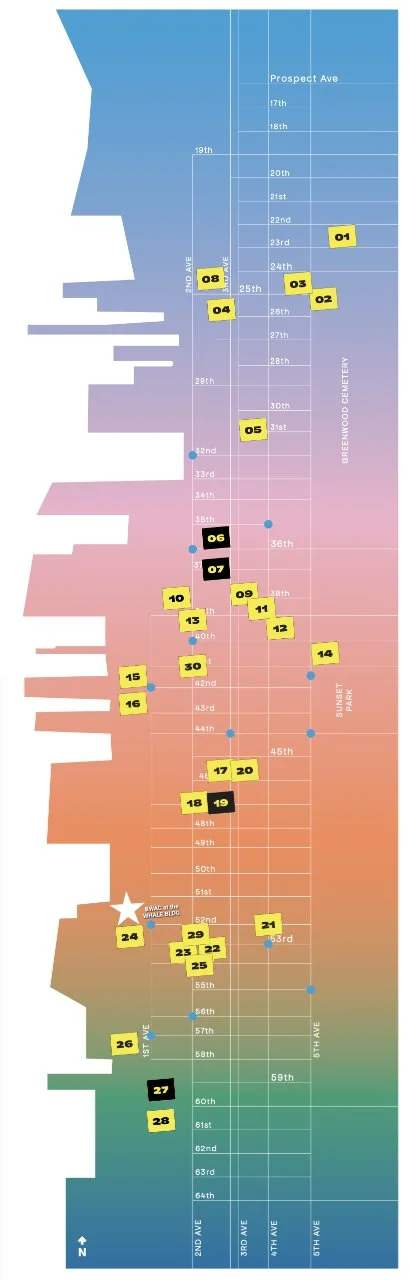
BWAC is participating in the Sunset Park Open Studios tour! See the map and the SPOS website for the BWAC location at the Whale Building, artist studio locations and special events.
Friday, October 16 5-7 pm
Saturday, October 17 12-6 pm
Sunday, October 18 12-6 pm
Shuttle bus is available! See details.
Plan your visit for Sunset Park Open Studios.
BWAC in Sunset Park Open Studios
BWAC is participating in the Sunset Park Open Studios tour! See the map and the SPOS website for the BWAC location at the Whale Building, artist studio locations and special events.
There is a shuttle bus operating on a loop every 30 minutes until 5 pm on Saturday and Sunday. To get to BWAC at the Whale Building, pick up the shuttle at Industry City (No. 6 on the map). The Whale drop off point is No. 24.
Friday, October 16 5-7 pm
Saturday, October 17 12-6 pm
Sunday, October 18 12-6 pm
Download the SPOS Shuttle Transportation Map HERE
Download a separate numbered SPOS map HERE
Go directly to the SPOS website HERE
Note: to view the above maps online on the SPOS website, click the link and scroll all the way to the bottom.

EXCLAIM!
A national juried exhibition of artwork that makes a statement, evokes emotions or is a call for action.
At the Whale Building, 14 53rd St., third floor, in Sunset Park, Brooklyn.
OPEN WEEKENDS 1-6 pm.
A national juried exhibition of artwork that makes a statement, evokes emotions or is a call for action. Whether bold or subtle, personal or political, literal or figurative, the works in this exhibition express compelling perspectives that are meaningful to the artist and speak to the present moment.
September 17- October 18, 2026
Opening reception Thursday, September 17 from 5-8 pm
OPEN WEEKENDS 1-6 pm
BWAC at the Whale Building
14 53rd Street, third floor
Sunset Park, Brooklyn, NY 11220
Participating Artists:
Audrey Anastasi, Inez Andrucyk, Nehemiah Barshlomo, Roy Berreth, Gerado Bravo, Syreta Briggs, Tarik Brown, Lee Ann Cadiz, Ana Carvalho, Charles Compo, Veronica Dannis-Dobroczynski, Alison Deas, Michael DeSiano, Rachel Emma Ray, Bin Feng, David Fitzgerald, Debra Friedkin, Susan Greaves, Noah Hanney, Lannie Hart-Lewis, Candy Heiland, John & Wendy, Ellen Kantro, Erin Kapp, Sasha Keys, Kathleen Erin Lee, Suyeun Lee, Une Oak Lee-Johnson, Jiani Lu, Nicholus Oldham, Erin Parsch, Marek Patyk, My Political Art, Kevin Pollack, Emiliano Ponce de León, Kenneth Ramirez, Sergei Saakian, Joshua Schwartz, Carolyn Sheehan, James Stamboni, Monique Stanton, Ella Stouse, Scott VanderVoort, Hannah Villanueva, Jonalis Villanueva, Paige Warmington, Janice Weiss, Lisa Wilde, Lin Yang, Nikita Zadorozhnyy
One Year Later: New Work, New Perspectives
This exhibition presents the work of BWAC members, marking one year since the fire in Red Hook destroyed the space BWAC had occupied for more than 30 years.
At the Whale Building, 14 53rd St., third floor, in Sunset Park, Brooklyn.
OPEN WEEKENDS 1-6 pm.
This exhibition presents the work of BWAC members, marking one year since the fire in Red Hook destroyed the space BWAC had occupied for more than 30 years. How have members responded? Have they moved in a new direction? Gained a new perspective? Are they reflective? Solemn? Playful? Retrospective? Experimental? Determined? See how each member has processed the year through their art.
September 17 - October 18, 2026
OPEN WEEKENDS 1-6 pm
Opening reception Thursday, September 17 from 5-8 pm
BWAC at the Whale Building
14 53rd Street, third floor
Sunset Park, Brooklyn, NY 11220
NYSCA Award
We are excited to announce we are a NYSCA 2026 Grantee.
We are honored and excited to announce BWAC has been awarded a New York State Council on the Arts ( @nyscouncilonthearts grant ) for 2026. The show of support from the council is immensely gratifying as we rebuild for the future.
This $10,000 from New York State is an investment in culture, the arts, and community which speaks to our continuing mission.

ARTISTS RESOURCE
Information from professional conservators on how to handle various types of damage to art.
With the retrieval of art from our damaged gallery Tuesday September 30, many pieces in various stages of water exposure were released.
We are working with local art conservators and cultural heritage emergency response teams to evaluate the condition of work which was not picked up, but we wanted to offer some tips on how to mitigate different types of damage to art for the artists that took their pieces home.
PLEASE BE AWARE, although this is advice provided by conservation professionals, each case is different and as an artist you should research the best course of action for your situation.
The following PDF resources developed by nationally and internationally recognized art conservation and cultural heritage emergency and disaster response organizations specifically to help in situations just like this one, cover a range of topics. The links below the PDFs were gathered from variety of sources:
DEALING WITH WATER DAMAGE
OTHER ISSUES
AGENCY AND GOVERNMENT HELP
As we receive more information we believe will be helpful, it will be added here.

BWAC Member Spotlight
Welcome to a new feature called Member Spotlight, where you can get to know a little about our artist members in their own words.
We are a community of artists, exhibiting, collaborating, and working together to share our passion with the world.
Meet our artists.
Welcome to our Member Spotlight as we introduce the world to our wonderful members. We are proud to be a member-based organization providing exhibition and collaboration opportunities to artists working in various media.
We invite you to meet some of our featured artists as we “open the doors” to our artist community.
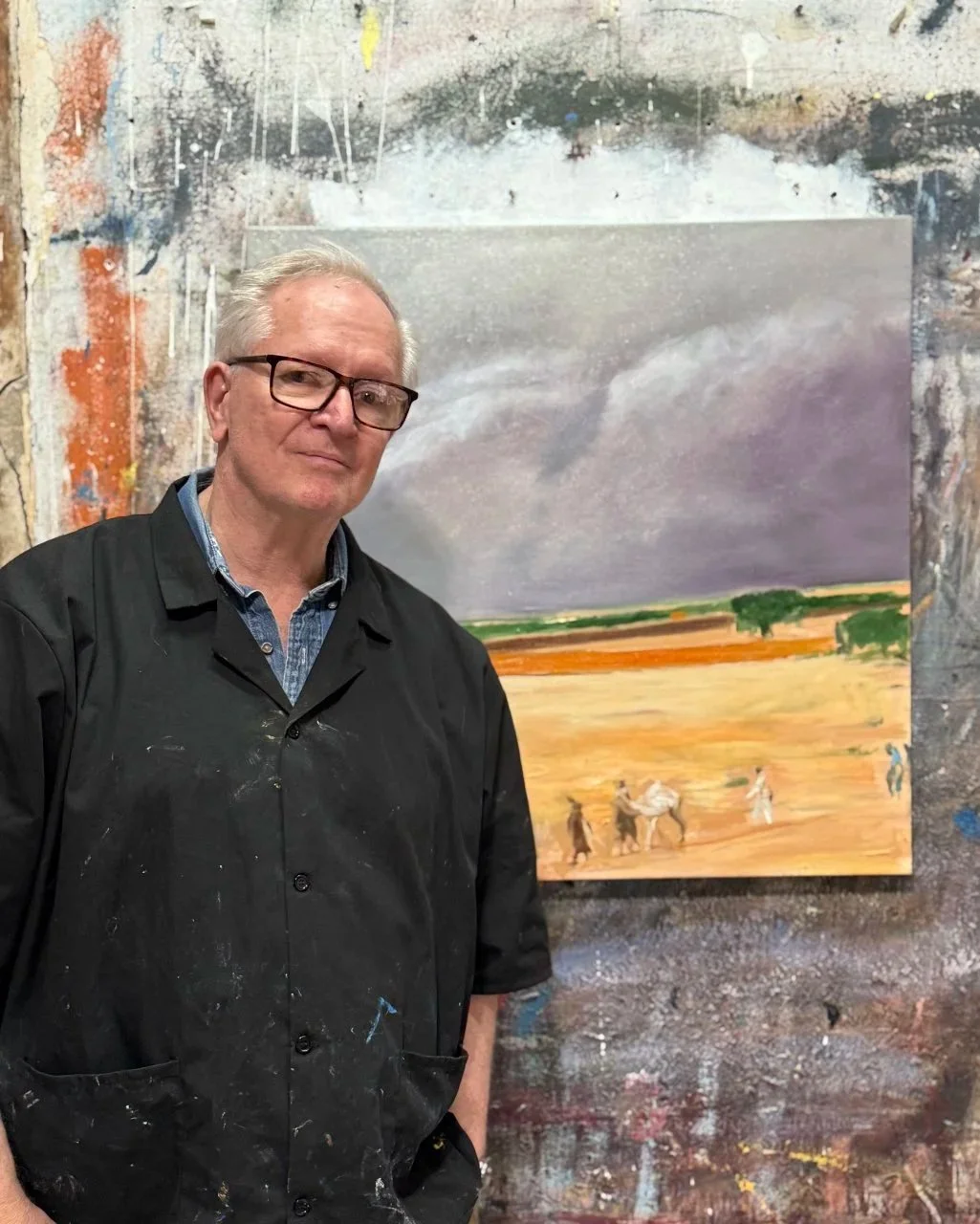
STEVEN LAWRY
1. Please tell us something about yourself. Where did you grow up? Where did you go to school? Do you have a different career besides being an artist?
I grew up in Florida. My parents met at the Jacksonville Naval Air Station in the years just after World War II. My father was an aviator and my mother a communications specialist. My father was from Pittsburgh and my mother from Madison, Wisconsin. They liked Florida and made their lives there. I went to university in Florida then joined the Peace Corps and went to Botswana, in Africa, in 1975, to work on land use and land reform problems. This set my life on a pathway of travel, study and work, living in Africa and Asia for many years, working on complex social and environmental problems and, fundamentally, trying to understand relationships between people and land. I've pursed these interests as a scholar, educator, and as a grant maker at the Ford Foundation. I've lived and worked in a number of African countries, often in rural areas, and in large cities like Cairo, New Delhi, and Jakarta. I've been based in New York City since 2001 but have been away a lot!
2. Can you walk us through your creative process? How do you approach starting a new piece?
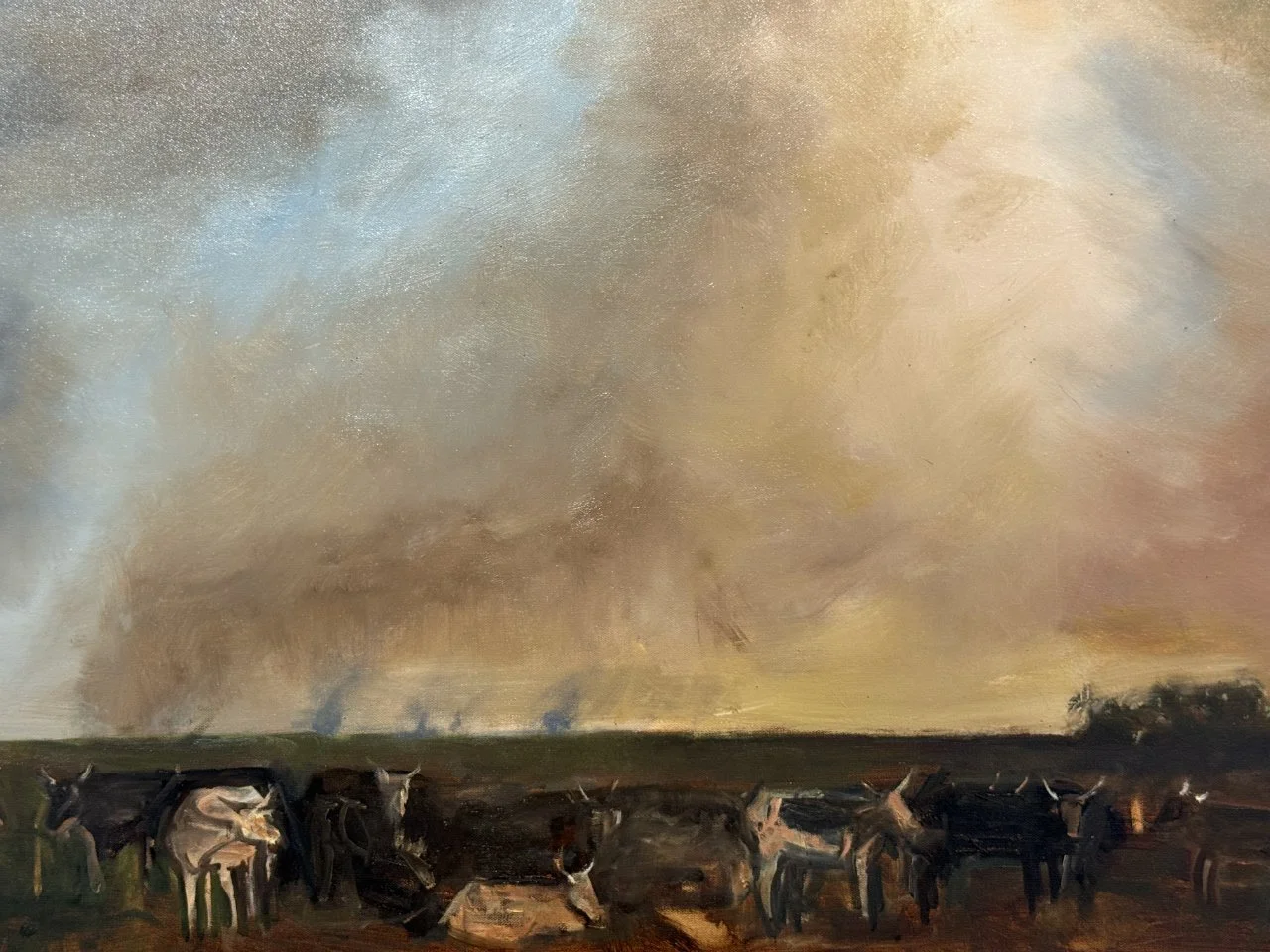
While I try to convey a sense of beauty and power in nature, human influence is almost always present. Sometimes the human presence appears small or inconsequential in relation to what historians of 19th century landscape painting called the sublime, the awesome power and dark beauty of nature, qualities associated with William Turner's landscapes. In some of my paintings human influence is a central theme. An example is my painting, Botswana grasslands burning at the end of the dry season. The scene shows a herd of cattle in the foreground. The sky is full of smoke from fires set on dry grasslands by herders. Burning off old grass just before the arrival of summer rains ensures rapid growth of fresh green grasses once the rains arrive. Fire is used to shape and preserve an ecology suitable for livestock grazing.
3. How long have you been painting? What medium do you prefer and why?
I started painting just under two years ago. I was drawn naturally to landscapes. My paintings almost always show evidence of human presence or influence. Landscapes, including those that inspire us for their natural beauty, have been shaped by human intervention. I believe that striving for sustainability, or human and ecological well-being, is fundamentally a humanistic project of social and ecological care. A British landscape artist I admire characterizes a landscape as, "a force field of dynamic and interrelated elements." I like the notion of force field, which we normally associate with quantum physics. I'm not happy with a painting unless it conveys a feeling that the scene is alive; that the elements in concert convey a sense of the forces of nature at work. A friend at the Art Students League likes to say, "Nature always gets it right," so depicting these interrelationships convincingly is the principal task one faces in divining a composition. Are the interactions authentic, yes; but do I give a sense of dynamism to the scene? Balzac wrote that, "the aim of art is not to copy nature but to express it." Expressing nature is what I strive for, though I often fall short.
4. Your work is sometimes (often?) topical. What determines your choices of subject?
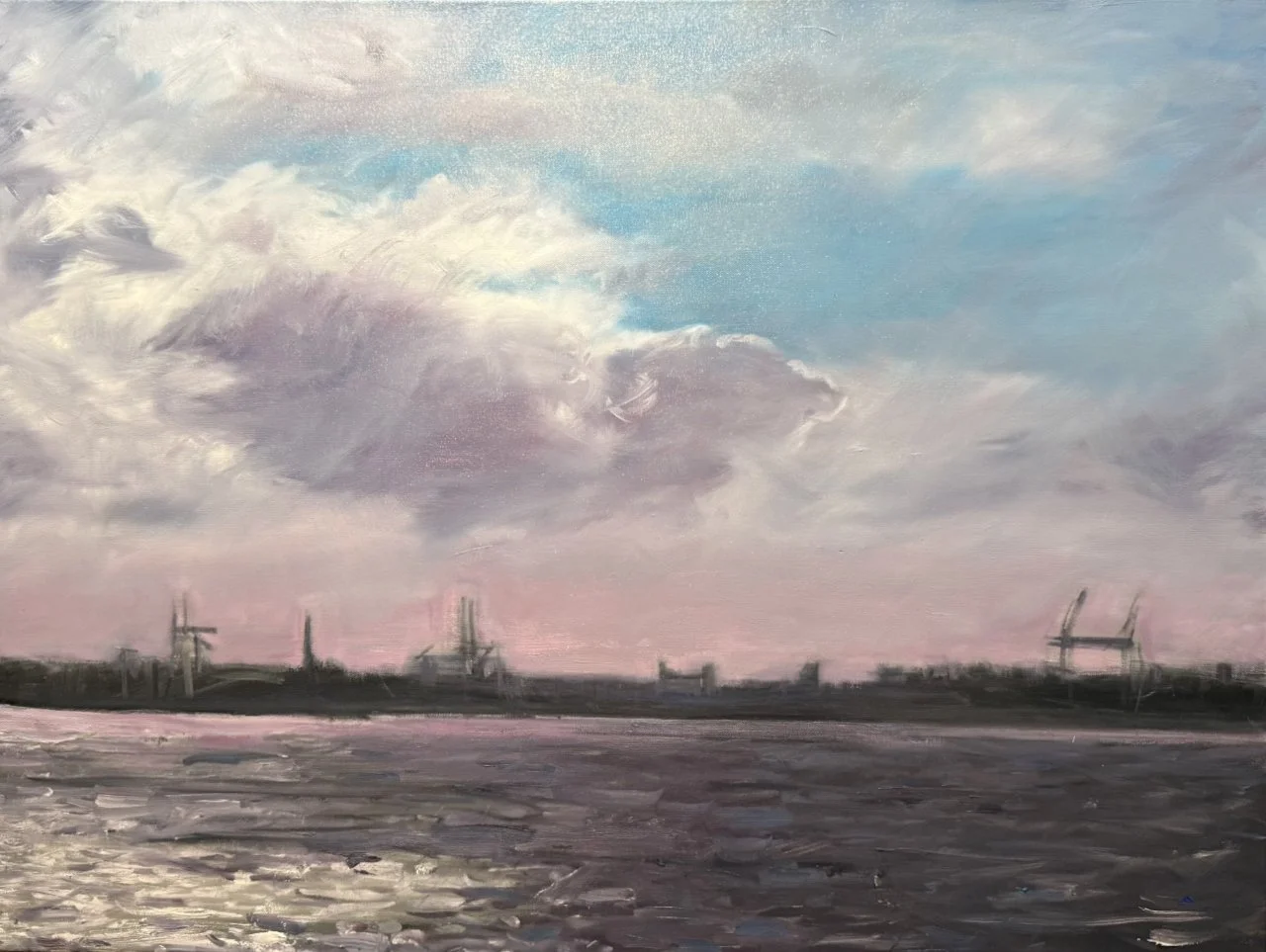
My sources of ideas for paintings vary. I aim to depict scenes that I've encountered directly in nature. I'm sensitive to the beauty of the scene and the natural history that the scene represents. Together these relate to light, color, and compositional and narrative elements and their potential to give the scene a sense of aliveness or the sublime. I've been painting New York harbor scenes, mainly because I spend my days at the harbor's edge. My first studio was in Red Hook, in a customs warehouse constructed of stone and timber in 1869 and right on the harbor (the building was destroyed by the fire that also destroyed BWAC's gallery in September 2025). My current studio is in Sunset Park, also overlooking the harbor. I take the ferry to work daily, from Lower Manhattan to Sunset Park. Being on the water makes for a wonderful commute. One of my first large paintings is View of Red Hook dockyards.
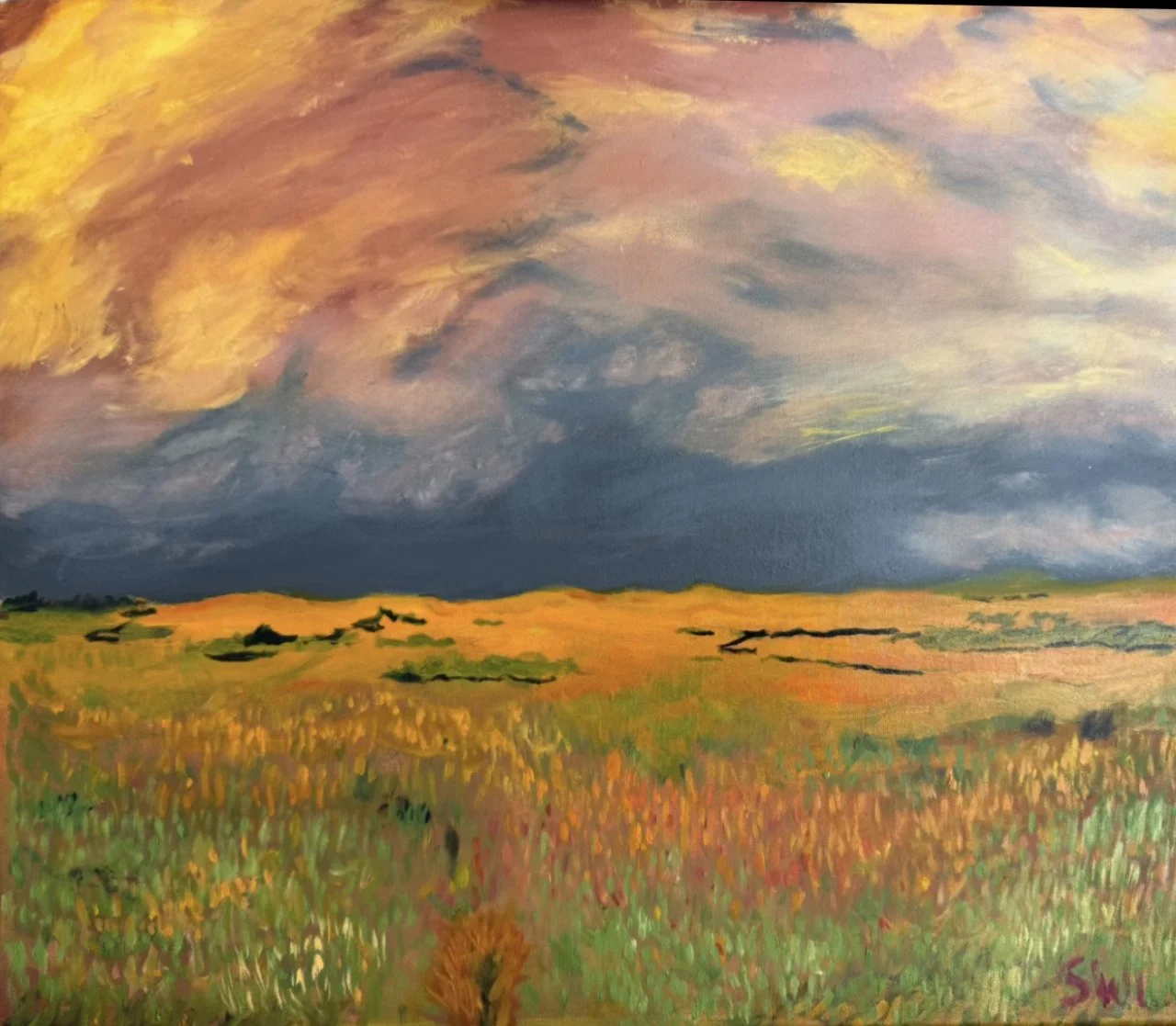
I did my dissertation research in Lesotho in the 1980s. It's a beautiful mountainous country in Southern Africa. Mountainous environments experience extreme and rapid shifts in temperatures, rainfall, snow, and winds. Summer storm in Lesotho lowlands reminds me of those forces, and of my wonderful time there.